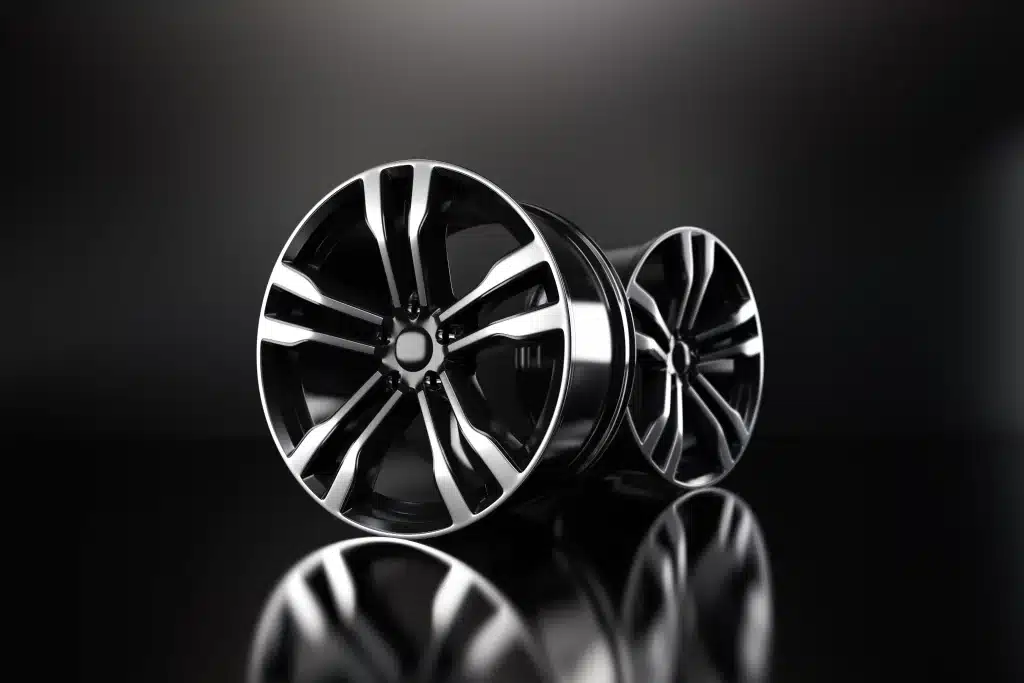
Alloy Wheel Straightening
At Alloy Fix Ltd, we specialise in professional alloy wheel straightening, restoring bent and buckled wheels to their original shape. Whether your wheel has been warped by a pothole, a kerb strike, or a heavy impact, our specialist equipment gets it running true again.
Our fully-equipped workshops in Romford, Dartford, and Hemel Hempstead allow our skilled team to handle any straightening job quickly and accurately. We serve clients across London, Kent, Hertfordshire, and the surrounding areas. Get in touch for expert advice and a competitive quote.
If you have any questions about alloy wheel straightening, contact our friendly team today. We are happy to talk you through the process and help you find the right fix for your wheels.


What We Can Straighten
- Wheels bent or warped by pothole damage
- Alloys buckled after a kerb or road impact
- Wheels causing vibrations or pulling while driving
- Wheels with visible distortion to the rim or barrel
- Alloys that have failed a tyre balance or MOT check
Alloy Wheel Straightening Explained
Alloy wheel straightening is the process of pressing a bent or buckled wheel back to its correct shape using specialist hydraulic equipment. A warped wheel does not just look wrong — it affects how your car drives and can put extra strain on your tyres and suspension.
Process
- Assessment: The wheel is inspected on a specialist jig to measure the exact amount of distortion.
- Controlled pressing: Hydraulic equipment applies precise force to the bent area, gradually pressing the metal back to its original profile without cracking or weakening it.
- Re-measurement: The wheel is checked again on the jig to confirm it is running within the correct tolerance.
- Final inspection: The straightened wheel is checked for any signs of cracking or stress before it is returned to you. If a crack is found, our team will advise you on our cracked wheel repair service.
How Alloy Wheel Straightening Works
When an alloy wheel hits a pothole or kerb hard, the metal is often pushed out of shape rather than broken. Where there is no crack, a bent wheel can usually be moved back into shape, as long as it is done with the right amount of force in the right place.
Finding the Bend
Not every bend can be seen by eye. Many buckles are on the inner edge of the wheel, facing the car, and some are too small to spot. A wheel is checked by spinning it and measuring how far the rim moves out of line as it turns. This is called a run-out check. Any movement away from a true circle shows exactly where the wheel is bent and by how much. A wheel balancer can also show up small bends that cause vibration at speed.
Moving the Metal Back
Once the bend has been found, controlled pressure is applied to that area only, bit by bit, rather than in one big push. The wheel is measured again between each stage. Working slowly like this lets the metal move back to its original profile without overstretching it. Some straightening methods also use carefully controlled heat to help the metal move, and the temperature has to be kept within safe limits so the alloy is not weakened.
Checking the Result
When the wheel is running true again, it is checked for any signs of cracking, because the original impact or the straightening itself can reveal a crack that was hidden. The tyre is then refitted and the wheel is balanced so it runs smoothly on the car.
Why You Should Not Straighten a Wheel Yourself
It can be tempting to try to knock a small bend out with a hammer or a jack, but this is not safe:
- Too much force can crack the wheel. Alloy can only be bent so far before it splits, and a crack is far more dangerous than the original buckle.
- You cannot measure the result. Without proper measuring equipment, there is no way to tell whether the wheel is truly round again or just looks better.
- Balance is affected. A wheel that is not quite true will still cause vibration and uneven tyre wear.
- No warranty. A DIY repair is not covered by any warranty, and it can turn a wheel that could have been straightened into one that needs replacing.
If you have just hit a pothole and are not sure whether your wheel is bent, read about the warning signs on our buckled wheel repair page. For prices, which depend on wheel size, damage and finish, see our price list.

Why Choose Alloy Fix?
UK's Trusted Alloy Specialists
Hundreds of 5-star reviews from satisfied customers across London, Kent, and Hertfordshire
99% of All Buckles Fixed
Our expert team fixes up to 99% of all buckled and bent alloy wheels using specialist straightening equipment.
Loan Wheels Available
Need your car while we work? We offer loan wheels so you can stay on the move while we straighten your alloys.
Expert Technicians
Our friendly technicians will assess your wheel and give you honest advice on whether straightening is the right solution.
Our Simple 3 Step Process
Get In Touch with our experts
Talk to one of our expert technicians and describe the problem with your alloy wheels.
Receive a Free quote
Our team will advise on the best course of action and give you a bespoke quote.
Get Booked in!
Pick the best available time and bring your wheels to your nearest workshop.
Use our Online Booking System
Alloy Fix offers top quality wheel repairs based in Romford Essex RM1 1DX, and Dartford Kent DA1 5BS, Hemel Hempstead Hertfordshire HP2 4SB providing expert alloy wheel repair services close to you. Fill in the form below to get a quote and book your slot at the nearest branch today!

Frequently Asked Questions
Can a bent alloy wheel be straightened?
Yes. Most bent alloy wheels can be straightened by a professional. Our technicians use specialist hydraulic equipment to press the wheel back to its correct shape. We fix up to 99% of all buckled and bent alloys. The remaining cases are those where the metal has cracked or the distortion is too severe to repair safely. We always check for cracks as part of the process and will tell you straight away if your wheel cannot be saved.
Is alloy wheel straightening safe?
Yes, when it is carried out correctly by trained technicians using proper equipment. At Alloy Fix, every straightened wheel is re-measured on a jig and inspected before it is returned to you. We only return a wheel once we are confident it is safe to use. If we find any sign of cracking during the process, we will let you know and discuss your options.
How long does alloy wheel straightening take?
Most straightening jobs can be completed on the same day. The exact time depends on the number of wheels and the level of distortion. Loan wheels are available at all three of our workshops so you can keep driving while we work.
Will I need new tyres after having a wheel straightened?
Not usually. Once the wheel is back to its correct shape, your existing tyre can normally be refitted and balanced as normal. However, if your tyre has been damaged by the same impact that bent the wheel, we will let you know during the assessment. Check the MOT inspection guidance on wheels and tyres for the safety standards that apply.
Can a straightened wheel be refurbished afterwards?
Yes. Once the wheel has been straightened, it can go straight into our alloy wheel refurbishment process. We offer powder coating and diamond cut refurbishment, both of which come with a 3-year warranty.
How do I know if my alloy wheel needs straightening?
Common signs are vibration through the steering wheel, especially at higher speeds, a car that pulls to one side, a tyre that keeps losing air and uneven tyre wear. You may also see a dent or flat spot on the rim, often on the inner edge. If you notice any of these, have the wheel checked.
Can I straighten a bent alloy wheel myself?
It is not recommended. Without the right equipment it is easy to use too much force and crack the wheel, and there is no way to measure whether it is truly round again. A DIY repair is also not covered by any warranty.
Does straightening weaken an alloy wheel?
When it is done correctly, with controlled pressure and careful measuring, the aim is to return the wheel to its original shape without weakening it. The wheel is checked for cracks afterwards, and if one is found you will be told about your options.
How often should I check my wheels for bends?
It is a good idea to look at your wheels whenever you clean the car, and always after hitting a pothole or kerb hard. Check both the outer and inner edges, and pay attention to any new vibration while driving.
Quote & Book
Fill the details in the best you can and book an appointment at our Romford, Dartford or Hemel Hempstead branch.
Hemel Hempstead Store
Alloy Fix Ltd,
Unit 3-5 Duxons Turn,
Hemel Hempstead
HP2 4SB
01442 914376
Dartford Store
Alloy Fix Ltd,
Riverside Industrial Estate,
Unit i4,
Riverside Way,
Dartford DA1 5BS
01322 617458
Romford Store
Alloy Fix Ltd,
Unit 4 Brooklands Approach,
Romford,
RM1 1DX
01708 728438